
PCI Compliance for SaaS Platforms: Who Owns the Payment Risk?
Most SaaS platforms start payments with a simple checkout. Then the product grows. Card data starts moving through APIs, subscription billing, support tools, reports, logs and several payment providers, and nobody can quite say where it ends up.
That’s usually when someone asks: Who actually owns the PCI compliance risk?
The answer is rarely one company. PCI responsibility follows the data. Each organization is responsible for the systems it operates and for how card data moves through them. A payment provider can take on specific security requirements, but outsourcing payments doesn’t remove the platform’s or the merchant’s own obligations.
Key takeaways
-
A SaaS company can be a merchant and a service provider at the same time.
-
Your payment architecture, including how payment providers are integrated, affects how much of your environment is in PCI scope.
-
Outsourcing reduces exposure but doesn’t transfer every obligation. You still have to manage your providers.
-
Tokenization and hosted fields can reduce exposure, but systems that handle card data or can affect payment security may still be in scope.
Who is responsible for PCI compliance?
PCI compliance responsibility depends on each organization’s role in the payment process. Merchants are responsible for how they accept payments, secure their own systems and manage their service providers. A SaaS platform’s responsibilities depend on whether its services store, process or transmit card data, or could affect the security of the payment environment. Payment service providers are responsible for the services and systems they operate and the requirements they’ve agreed in writing to meet.
Many SaaS companies hold two roles. They are a merchant when they charge customers for their own subscriptions. They may also be a service provider when their platform handles card data or supports payments for their business customers. The PCI Security Standards Council confirms that one organization can be both. (PCI SSC FAQ 1079)
Architecture affects your PCI scope
Here are two ways to build the same feature: saving a customer’s card for recurring billing.
Design A: Card data passes through the platform. The customer’s card number reaches your API, and your application forwards it to a processor. Along the way, it may be written to request logs, picked up by an error tracker or copied into a database backup. Those systems may be in scope for your PCI DSS assessment, as may connected systems that could affect the security of the cardholder data environment.
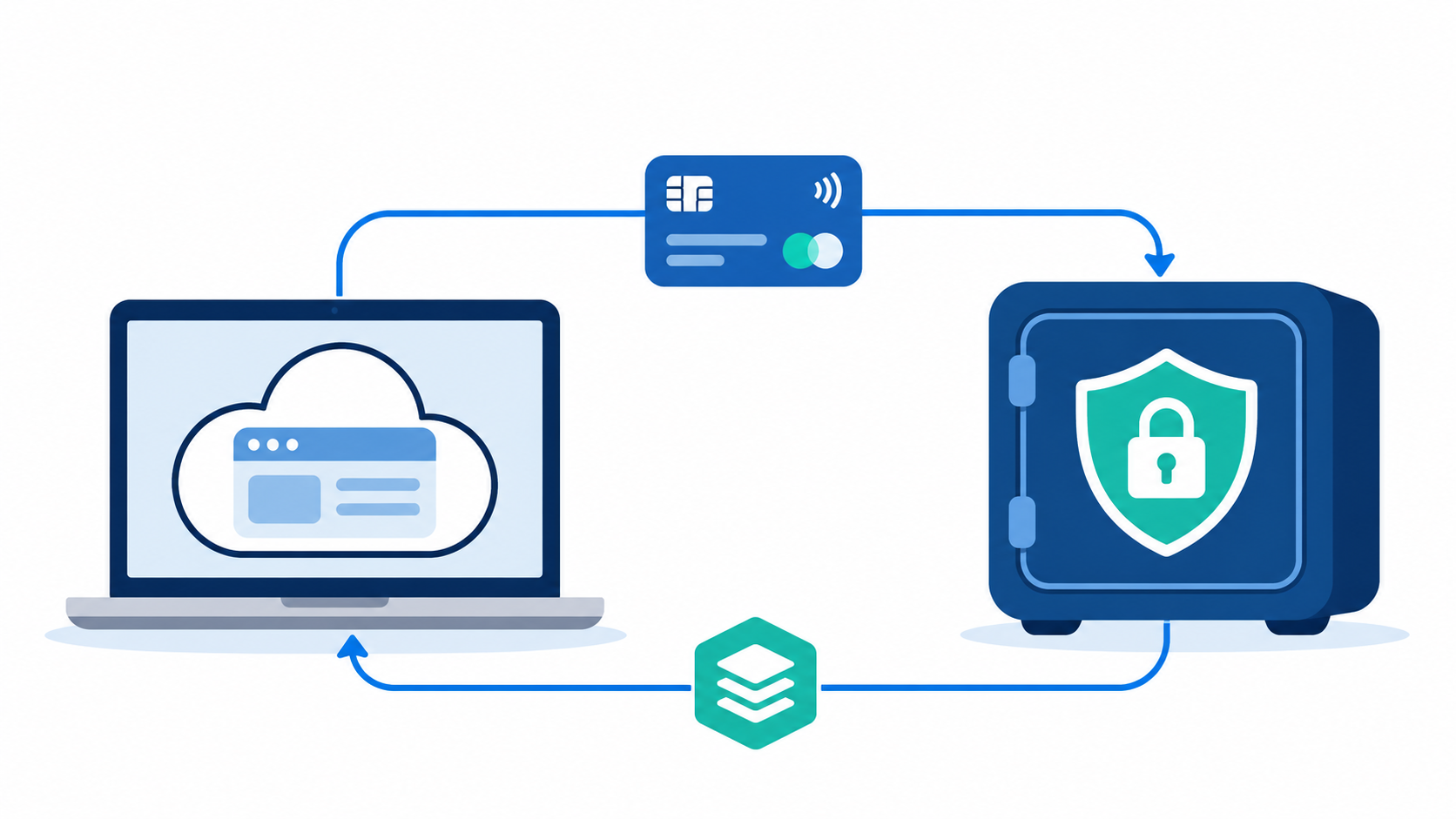
Design B: Card data bypasses the platform. A hosted payment form sends the card number directly to a payment provider. Your application receives a payment result and a token for future charges. Far fewer of your systems ever see card data, which can reduce the number of systems in scope.
The gateway might be identical in both designs. What changes is where card data can travel, which systems can access it, and which systems could affect its security.
Outsourcing helps, but it doesn’t transfer every obligation
A PCI DSS-validated service provider can significantly reduce your exposure to card data. It doesn’t make you PCI compliant automatically.
You still need to know which requirements apply to your own environment and which ones your providers cover. PCI DSS Requirement 12.8 addresses managing those relationships: performing due diligence before engaging a provider, maintaining written agreements, documenting responsibility boundaries and checking each provider’s compliance status at least annually. (PCI SSC FAQ 1312)
In practice:
-
The provider is responsible for the requirements that apply to the services it delivers.
-
You remain responsible for your own applicable requirements and for overseeing the
provider.
A processor, a vault provider and a cloud host may each protect a different part of your payment environment. The SaaS platform still needs to understand how those pieces fit together.
Can tokenization reduce PCI scope?
Yes, when it’s implemented well. Tokenization lets your application use a reference value in place of the real card number in day-to-day workflows. This can help keep card data out of databases, support tools, internal APIs and reporting systems.
There are limits, though:
-
If your systems can detokenize, meaning they can retrieve the original card number, they may still be in scope.
-
If your systems can affect the security of the payment flow, for example by serving the page that hosts the payment form, they may still matter to your assessment.
-
Hosted payment forms and iframes can reduce exposure, but they don’t guarantee a particular Self-Assessment Questionnaire on their own. The page that embeds them may still have applicable security requirements.
A token is a scope-reduction tool, not a scope-elimination switch.
Start with a data-flow review
Before you add more controls, map how payment data actually moves:
-
1. Entry: Where do customers enter card details: web, mobile, phone or API?
-
2. Access: Which systems receive, or could retrieve, the full card number?
-
3. Leakage:Could card data appear in logs, call recordings, support tickets, analytics or backups?
-
4. Providers:Which third parties handle card data or meet requirements on your behalf?
-
5. Oversight:Who reviews provider agreements and collects current compliance evidence each year?
When you collect that evidence, check that it fits. The PCI SSC expects service providers to show that their assessment covers the specific services their customers rely on. A provider’s Attestation of Compliance is useful when its scope matches the services the provider delivers to you. (PCI SSC FAQ 1065)
Frequently asked questions
Is a SaaS platform a PCI service provider?
It may be. A platform that stores, processes or transmits card data for its customers, or provides services that can affect the security of their payment environment, is likely acting as a service provider. It may also be a merchant for its own billing.
If I use a PCI-compliant payment provider, am I compliant?
Not automatically. Your provider is responsible for its services and applicable requirements. You’re still responsible for your own environment and for managing the provider relationship under Requirement 12.8.
Does tokenization take my systems out of PCI scope?
It can greatly reduce scope, but systems that can retrieve card data or affect the security of the payment flow may remain in scope.
Support payments without spreading card data
Does tokenization take my systems out of PCI scope?SaaS platforms need flexible payment features. Their applications rarely need to hold card numbers. A dedicated payment infrastructure layer can handle secure capture, tokenization, vaulting and gateway connectivity, while the application works with tokens.
HostedPCI is a PCI DSS Level 1 service provider offering secure capture, tokenization, vaulting, routing and multi-gateway connectivity. HostedPCI isn’t a gateway or processor, so you keep your existing provider relationships while HostedPCI helps keep sensitive card data out of systems that don’t need it.
PCI responsibility follows your payment architecture.Map where the data goes, define what each provider is responsible for, and reduce the number of systems that receive card details. Those decisions are easiest to make early, before payments are built into every corner of your platform.
Talk to HostedPCI about reducing PCI scope on your platform →
Learn more at www.HostedPCI.com.